
Commercial Roof Evaluation Program
Got-Leaks.com provides documented commercial roof evaluations for Florence, the Pee Dee Region, Charlotte, and Greater Charlotte property owners who need clarity before approving repairs, restoration, coatings, maintenance, or replacement planning.
A commercial roof evaluation helps identify visible failure points, leak indicators, drainage concerns, roof system conditions, prior repair areas, restoration viability, and maintenance priorities before small roof issues become rushed capital decisions.
- Drone-assisted roof documentation
- Leak and failure-point review
- Repair, restoration, maintenance, or replacement planning
- Commercial roof condition reporting
- Budget-forward recommendations
- Supported by East Coast Renewable
Built for commercial owners, property managers, facility teams, churches, schools, industrial buildings, warehouses, retail centers, and commercial portfolios.
Most Commercial Roof Decisions Should Start With Documentation
A roof leak, aging membrane, rusting metal panel, failed repair, or ponding area can create pressure to make a fast decision. But commercial roof decisions affect budgets, operations, tenants, inventory, equipment, production schedules, and long-term building value.
An evaluation gives ownership and facility teams a clearer picture of what is happening on the roof before deciding whether to repair, restore, coat, maintain, monitor, or plan for replacement.
- Identify visible roof failure points before they create larger problems
- Understand whether leaks may be isolated or part of a larger pattern
- Document conditions for ownership, managers, boards, or budgeting teams
- Evaluate whether restoration may be a realistic option
- Prioritize repairs and maintenance needs
- Support 12–36 month roof budget planning
- Avoid relying only on emergency patching or guesswork

A ceiling stain tells you where water appeared.
It does not always tell you where the roof failed.
What We Review During the Evaluation
A commercial roof evaluation is a structured review of visible roof conditions, high-risk details, drainage patterns, and previous repairs.
| Evaluation Area | What We Look For | Why It Matters |
|---|---|---|
Roof system type | Metal, TPO, EPDM, PVC, modified bitumen, SPF, coatings, hybrid systems | Determines the correct repair, maintenance, or restoration path |
Leak history | Interior stains, tenant complaints, service records, recurring leak areas, prior repair locations | Helps connect roof conditions to real building impact |
Seams and laps | Open seams, fatigue, loose laps, membrane separation, metal panel movement | Seams are common commercial leak paths |
Fasteners | Backed-out screws, failed washers, missing fasteners, rusted fastener heads | Fastener deterioration is a major issue on exposed fastener metal roofs |
Flashings | Wall flashings, curb flashings, edge details, pipe boots, transitions | Flashing failures often allow water into the roof system |
Penetrations | HVAC units, vents, pipes, exhaust fans, skylights, pitch pans | Penetrations create concentrated leak risk |
Drainage | Ponding water, blocked drains, scuppers, gutters, low spots, poor slope | Drainage problems accelerate roof deterioration |
Membrane condition | Punctures, shrinking, cracking, splitting, blisters, worn areas, surface degradation | Determines repair scope and restoration viability |
Coating condition | Chalkiness, thinning, cracking, peeling, exposed foam, failed coating | Critical for coated and SPF roof systems |
Previous repairs | Patch history, incompatible materials, temporary repairs, repeat service areas | Failed repairs can hide larger issues |
Moisture indicators | Soft areas, insulation concerns, staining patterns, possible saturated zones | Moisture affects restoration and replacement decisions |
Safety/access concerns | Access points, roof traffic, walk paths, fragile areas, equipment zones | Supports safe inspection and maintenance planning |
Commercial Roof Systems We Evaluate
We have the expertise to evaluate, document, and service all major commercial roofing systems.
Exposed Fastener Metal Roofs
We review fasteners, washers, panel laps, ridge caps, gutters, skylights, transitions, oxidation, rust streaks, penetrations, and prior patch areas.
Standing Seam Metal Roofs
We review seams, clips, movement points, curbs, transitions, penetrations, ridge details, gutters, and expansion-related stress.
TPO Roof Systems
We review heat-welded seams, punctures, flashing details, drains, curb details, terminations, roof traffic areas, and membrane condition.
EPDM Roof Systems
We review seams, shrinkage, flashing details, punctures, membrane aging, insulation concerns, and drainage-related stress.
PVC Roof Systems
We review seams, penetrations, grease exposure areas, curbs, drains, rooftop equipment zones, and traffic paths.
Modified Bitumen Roofs
We review open laps, cracking, blistering, alligatoring, granule loss, ponding areas, flashings, and previous repairs.
SPF Roof Systems
We review protective coating condition, exposed foam, cracks, punctures, drainage, coating thickness concerns, and recoat timing.
Coating Systems
We review adhesion, cracking, peeling, thinning, exposed substrate, reinforcement details, ponding areas, and recoat opportunities.
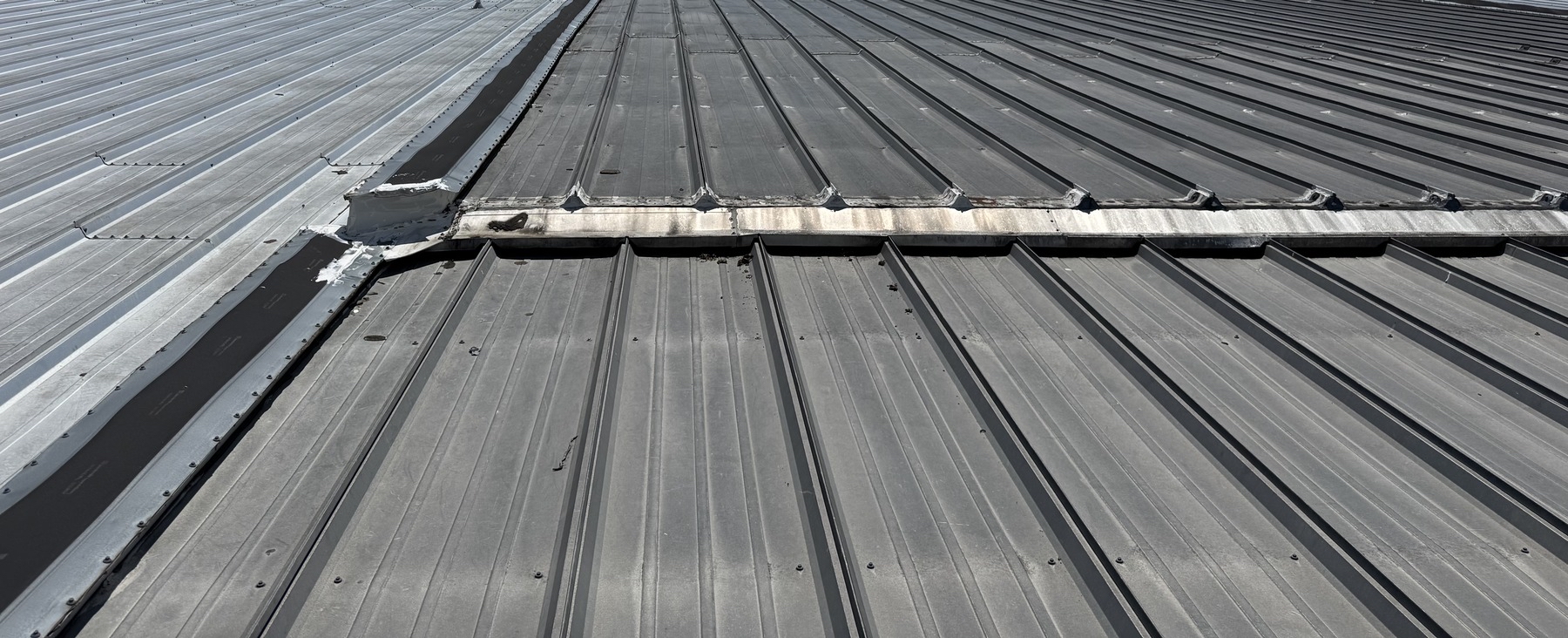
Metal roof panels and an existing transverse transition.
Why the Visible Leak Is Not Always the Source
Commercial roof leaks can travel before they appear inside the building. Water may enter at a penetration, seam, curb, wall transition, drain, or fastener and then move laterally through insulation, along decking, or through building components before showing up as a ceiling stain.
- Water can travel under membranes before entering the interior
- Saturated insulation may hold moisture and spread the leak area
- Interior stains may appear far away from the actual roof opening
- Repeated patching can fail when the true source is not identified
- HVAC curbs, penetrations, seams, drains, and transitions often need close review
Questions We Ask
- When did the leak first appear?
- Does it happen during wind-driven rain or every rain?
- Has the same area been patched before?
- Has the leak moved over time?
- Are tenants, inventory, equipment, or operations affected?
- Are there roof access restrictions?
- Is there a maintenance history or prior roof report?
Can This Roof Be Restored, or Does It Need Another Path?
One of the most valuable parts of a commercial roof evaluation is determining whether the roof may qualify for restoration. Restoration can be a strong option when the roof condition, substrate, moisture levels, drainage, adhesion, and manufacturer requirements support it. But not every roof is a candidate.
Restoration May Be Considered When:
- Roof structure appears stable
- Moisture conditions are acceptable
- Substrate can support repair/coating
- Seams and details can be reinforced
- Drainage can be managed or improved
- Existing repairs can be addressed
- Adhesion requirements can be met
- Manufacturer requirements can be followed
Replacement or Major Planning May Be Needed When:
- Widespread saturation is present
- Structural concerns exist
- Roof system is severely deteriorated
- Drainage problems are severe
- Too many prior repairs have failed
- Substrate is not suitable
- Adhesion or manufacturer requirements cannot be met
- Continued repairs would not be responsible
Evaluation Data Helps Owners Make Better Roof Decisions
Commercial roof decisions often involve ownership groups, property managers, boards, facility teams, capital budgets, tenants, production schedules, and seasonal timing. A documented evaluation helps move the conversation from opinion to evidence.
Budget Planning
Understand whether the roof may need immediate repair, maintenance, restoration planning, or longer-term replacement budgeting.
Operational Planning
Schedule work around tenants, employees, production, inventory, customer access, or school/church calendars.
Repair Prioritization
Separate urgent leak risks from lower-priority maintenance items.
Capital Planning
Use documentation to discuss 12–36 month roof planning with internal teams, CPAs, financial advisors, or ownership groups.
Vendor Clarity
Give decision makers a clearer basis for comparing repair, restoration, coating, maintenance, or replacement options.
Our Commercial Roof Evaluation Process
Step 1: Intake and Roof History
We gather building information, roof type if known, leak history, prior repairs, access requirements, active leak concerns, and business impact.
Step 2: Ground-Level Review
We look for visible roof indicators from the property level, including drainage issues, rust streaks, staining, gutters, downspouts, wall transitions, and building conditions.
Step 3: Roof Access and Visual Inspection
When safe access is available, we review roof details including seams, fasteners, flashings, drains, penetrations, curbs, membrane condition, coatings, and patch history.
Step 4: Drone-Assisted Documentation
Drone imagery may be used to document larger roof areas, drainage patterns, roof sections, equipment zones, seams, and visible condition patterns.
Step 5: Moisture and Substrate Considerations
Where appropriate, additional investigation such as core sampling, moisture review, or other diagnostic steps may be recommended before restoration or replacement decisions.
Step 6: Findings and Recommendation
We organize the findings into a practical recommendation: repair, restore, maintain, monitor, recoat, or plan for replacement.
Step 7: Next-Step Planning
We help the decision maker understand priorities, timing, budget planning considerations, and whether a proposal or maintenance plan should be developed.
What You Receive After the Evaluation
The goal is not to sell a roof before understanding the roof. The goal is to give you a clearer path.
- Roof condition findings
- Photo documentation
- Visible failure-point notes
- Leak-risk observations
- Repair and maintenance priorities
- Restoration viability notes
- Recommended next step
- Budget planning guidance
- Proposal path if appropriate
- Maintenance recommendations
- Documentation for owners, managers, boards, or facility teams
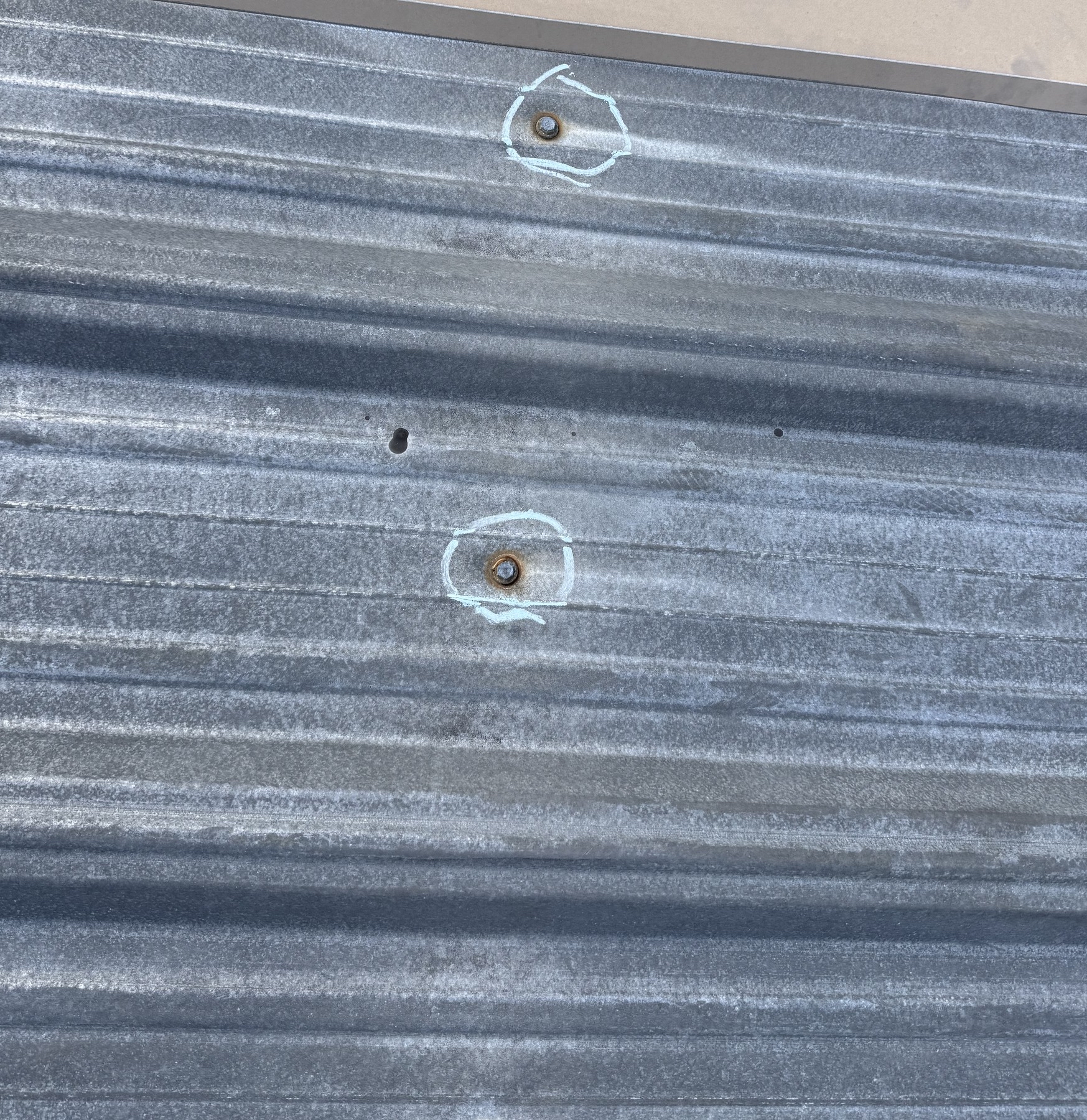
Marked fastener locations documented for review.

Who This Program Is Built For
Different commercial stakeholders have different operational and financial priorities. Our evaluations are structured to provide the information each decision maker needs.
Building Owners
Need clarity before spending capital on repairs, restoration, coatings, or replacement.
Property Managers
Need documentation, vendor coordination, tenant communication, and predictable follow-up.
Facility Managers
Need practical information about leaks, drains, seams, equipment areas, and maintenance priorities.
Churches and Schools
Need budget-sensitive planning, documentation, and minimal disruption to building use.
Warehouses and Industrial Facilities
Need to protect inventory, equipment, safety, and production flow.
Retail Centers and Offices
Need tenant confidence, interior protection, and clear roof planning.
Municipal and Public Buildings
Need documentation to support budgeting, procurement, and responsible stewardship.
Signs Your Commercial Roof Should Be Evaluated
If your building exhibits any of these indicators, a documented commercial roof evaluation can help establish the actual condition before larger failures develop.
Commercial Roof Evaluations Across the Carolinas
Got-Leaks.com provides commercial roof evaluations for Florence, Darlington, Marion, Hartsville, Dillon, Sumter, and the Pee Dee Region of South Carolina, as well as Charlotte, Concord, Huntersville, Matthews, Gastonia, Rock Hill, Fort Mill, and the Greater Charlotte Area.
Frequently Asked Questions
Need Clarity Before You Repair, Restore, Coat, or Replace?
Start with a documented commercial roof evaluation. Got-Leaks.com helps Carolinas building owners and facility teams understand roof condition, identify failure points, and choose the right next step.
Or call us at 843-731-3806